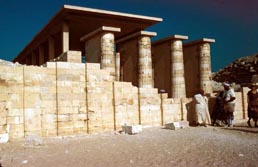
Photo Credit Claude L. Clark
SAQQARA IN ACIENT KEMET
Kemet is the first monumental civilization. Civilization began in Africa. - C. L. Clark
ANCIENT IFE
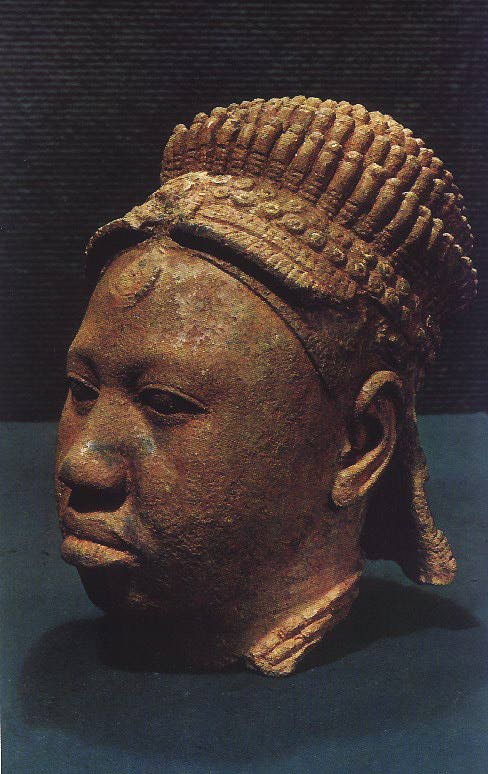
Africans believed that the creative-source in nature and human culture were two completely different developments. Africans did not wish to offend nature by trying to imitate creation. They consider it an insult to do so. The human mission was to advance culture not creation. Nok civilization around 300 BC began using the cultural geometric volumes of sphere cylinder and cone to portray the human figure. When Yoruba emigrants from the Nile valley moved into the region they continued using those same shapes to create an illusion of human likeness. - C. L. Clark
MALI CIVILIZATION
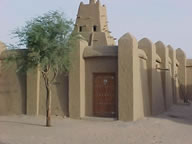
The worlds first public schools systems (Koran Schools) and the worlds first 3 Universities began in Mali. The University in the city of Timbuktu was the most famous University. Students from Asia and the European Continent came to study there. - C. L. Clark
INDUS VALLEY CIVILIZATION
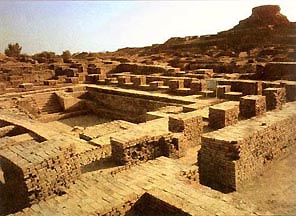
The cities of Harappa and Mohenjo-daro were founded about 2200 BC by two groups of people from Africa, Negroid and Dravidian (Black people with wooly hair and black people with straight hair). Some scholars say that many left the Nile Valley during the Third Dynasty in Kemet. They built the world's first indoor toilets with closed sewer systems that ran from each toilet stool to the outskirts of town. - C. L. Clark.

Greece departure from spirituality was the main focus of this civilization. They contributed a "secular world" in their society, which over a period of time made most things they learned from Kemet very different. Greeks were athiest. They believed that "Man was the measure of all things". Basic principles of Greek Civilization were passed on to European Civilization and from European Civilization on to Western Civilization. Western Civilization serves as a linking system for current cultures and civiliations. Plato's Utopia was used to develop a "Global Cast System". "First World, Second and Third World people" was Europes way of dividing the world for its own personal economic gains. European Civilization added the concept of "Race" to the cast system. - C. L. Clark
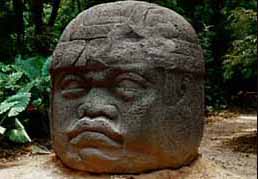
Kemet explorers with the help of Phonesean ships and sailors visited the Americas between 300 and 400 B. C. The large Negroid heads of stone are a result of their visit. They found that the earth was round. The Greek Aristophanes was a student in Alexandria. He learned much about kemet and sciense. He passed information on to Greece. - C. L. Clark
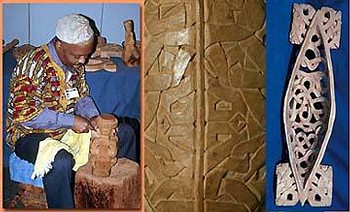
Claude Lockhart Clark is a family archivist, Master Woodcarver and Scholar in West and Central African Art. His late father Claude Clark was a printmaker and easel painter. Lockhart began his career as a ceramic sculptor at age 14 and by age 16 his work was appearing in adult shows in musuem and college art exhibits. The elder Claude Clark was one of three founders of African American Studies in the American College System, here in the U. S. The first course titled "African and African American Art Survey" was taught in the spring of 1968 at the newly established Black Studies Department, Merritt Community College in Oakland California. Japan was offering African American studies in the late 1950's, beginning with Negro literature and the Republic of Ghana was the first to offer courses in African Studies around the late 1950's. The younger Claude Clark began working with his father in 1967, processing visual materials his father would need for the art history courses. The father, Claude Clark published the first African American Art Curriculum guide during the spring of 1970. In 1997 the younger Clark launched the first in a series of websites "African Metropolis", to be followed by "Earthmetropolis.com", March 18, 2000.